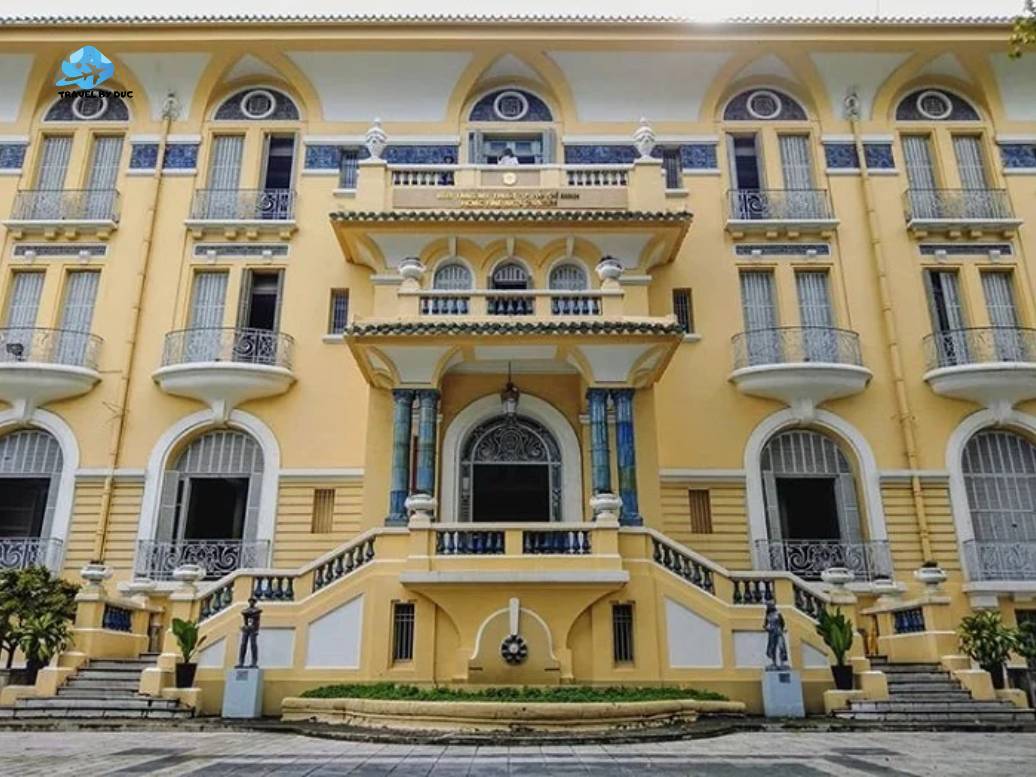
Before visiting the museum of fine art Ho Chi Minh, I expected to spend a quiet afternoon looking at Vietnamese paintings and sculptures. What I did not realize was that the building itself had already lived through an important part of Saigon’s history. Located at 97A Phó Đức Chính in District 1, the museum was originally built as a residence and workplace for the Hui Bon Hoa family, rather than as an art museum. Its architecture reflects a fascinating combination of French and Eastern influences, with decorative tiles, ceramic details, and traditional elements woven into the European design.
The Museum of Fine Arts was officially established in 1987 and opened to visitors in 1989. Today, it preserves more than 20,000 artifacts and artworks covering traditional, modern, and contemporary Vietnamese art. What interested me most, however, was discovering how the history of the building and the history of Vietnamese art come together in one place. Walking through its old corridors and galleries felt less like visiting a conventional museum and more like stepping into a different chapter of Saigon’s past.
The history of the museum of fine art Ho Chi Minh and how it became a cultural landmark
Before I knew much about the museum of fine art Ho Chi Minh, I assumed the building had always been designed to display paintings and sculptures. Once I learned more about its past, I found the place much more interesting. The museum occupies a historic building that was originally connected to the Hui Bon Hoa family, one of the well known wealthy merchant families of old Saigon. The building was created as a residence and working space rather than a museum, and its architecture brings together European influences with Asian decorative elements. Walking through the museum, I felt that I was experiencing two stories at the same time. There was the history told through the artworks inside, but there was also the story of the building itself, from its origins in old Saigon to its transformation into one of the city’s important art institutions. The museum was officially established in 1987, making its relatively recent role as a museum very different from the much older history of the buildings.
When the building was constructed
The exact construction history is more complicated than I initially expected. Many tourism sources state that the main building was designed by French architect Rivera and constructed between 1929 and 1934. However, official historical material also notes that the wider Hui Bon Hoa complex developed over different periods, and some details about the dates of individual buildings remain uncertain. What interested me most was the architecture rather than simply remembering a construction date. The building combines European architectural ideas with Asian decorative features, including tiled roofs, ceramic decorations, and other details influenced by Eastern traditions. This mixture gives the museum of fine art Ho Chi Minh a character that feels distinctly connected to Saigon’s multicultural past.
The building’s role in Saigon’s history
Long before it became a museum, the complex was associated with Hui Bon Hoa, better known locally as Chú Hỏa, a prominent Chinese merchant and property owner in Saigon. The family was connected with numerous buildings across the city, and their former residence became part of the architectural landscape of old Saigon. I found this part of the story particularly fascinating because it changed the way I looked at the museum. Instead of seeing it simply as somewhere to spend an hour looking at art, I started noticing the old architectural details around me. The decorative tiles, old floors, windows, arches, and overall layout made the visit feel like a small journey through Saigon’s urban history. The building was also recognized as a city level architectural and artistic heritage site in 2012, further highlighting its importance beyond the artworks displayed inside.
How the museum changed over time
The biggest transformation came when the building was converted into the Ho Chi Minh City Museum of Fine Arts. The museum was officially established under a decision dated September 5, 1987, and the historic building was adapted for its new function. Its interior was modified to accommodate exhibition spaces, while many of its exterior architectural characteristics were retained. Over time, the museum of fine art Ho Chi Minh developed into an important center for Vietnamese art, preserving and displaying paintings, sculptures, traditional crafts, archaeological objects, and other works representing different periods of Vietnamese artistic history. For me, this transformation is what makes the museum worth visiting. The building did not simply become a container for artworks; its own history became part of the experience. As I moved from one room to another, I found myself paying attention not only to the paintings and sculptures but also to the old structure surrounding them. That combination of art, architecture, and Saigon’s past is what made my visit feel much more memorable than I had originally expected.
The French colonial architecture that makes the museum of fine art Ho Chi Minh so distinctive
One of the first things that caught my attention at the museum of fine art Ho Chi Minh was not a painting inside the galleries, but the building itself. Before entering, I spent a few minutes standing outside simply looking at the facade and trying to take in all the small architectural details. The building reflects the French colonial period in Saigon, but it does not feel entirely European. Traditional Asian decorative elements appear throughout the design, creating a visual combination that I found particularly interesting.
For me, this is one of the reasons the museum feels different from a typical art gallery. You can appreciate the artworks inside, but you can also spend time looking at the architecture, taking photographs, and imagining what this part of Saigon might have looked like decades ago. It also became one of the more memorable stuff to do in Saigon for me, especially because I could combine an interest in art, history, and architecture in a single visit. If you are interested in history, photography, or colonial architecture, I would recommend arriving with enough time to explore the building rather than rushing directly into the exhibition rooms.
The exterior design and yellow facade
The warm yellow exterior immediately gives the museum a distinctive appearance. Like many historic buildings in Ho Chi Minh City, the color and proportions of the facade create a strong connection with the city’s French colonial architectural heritage. When I first saw the building, I understood why it is such a popular place for photographs. The combination of the yellow walls, dark window frames, decorative details, and surrounding greenery gives the museum of fine art Ho Chi Minh a slightly nostalgic atmosphere. I found the best way to appreciate the facade was simply to slow down and look at it from different angles. Rather than taking one quick photograph and moving on, I noticed that different parts of the building revealed different details as I walked around.
Tiles windows staircases and decorative details
The smaller architectural details are where I think the museum becomes particularly interesting. Decorative tiles, patterned floors, old windows, staircases, arches, and ceramic elements give the building a character that is easy to miss if you are focused only on the artworks. I especially enjoyed looking at the tiled surfaces and staircases as I moved between the different spaces. They made the building feel much older and more personal than a modern museum with plain white walls. If you enjoy photography, I would recommend looking beyond the obvious compositions. At the museum of fine art Ho Chi Minh, details such as a staircase, a window, or a section of patterned tile can sometimes create more interesting photographs than the main facade.
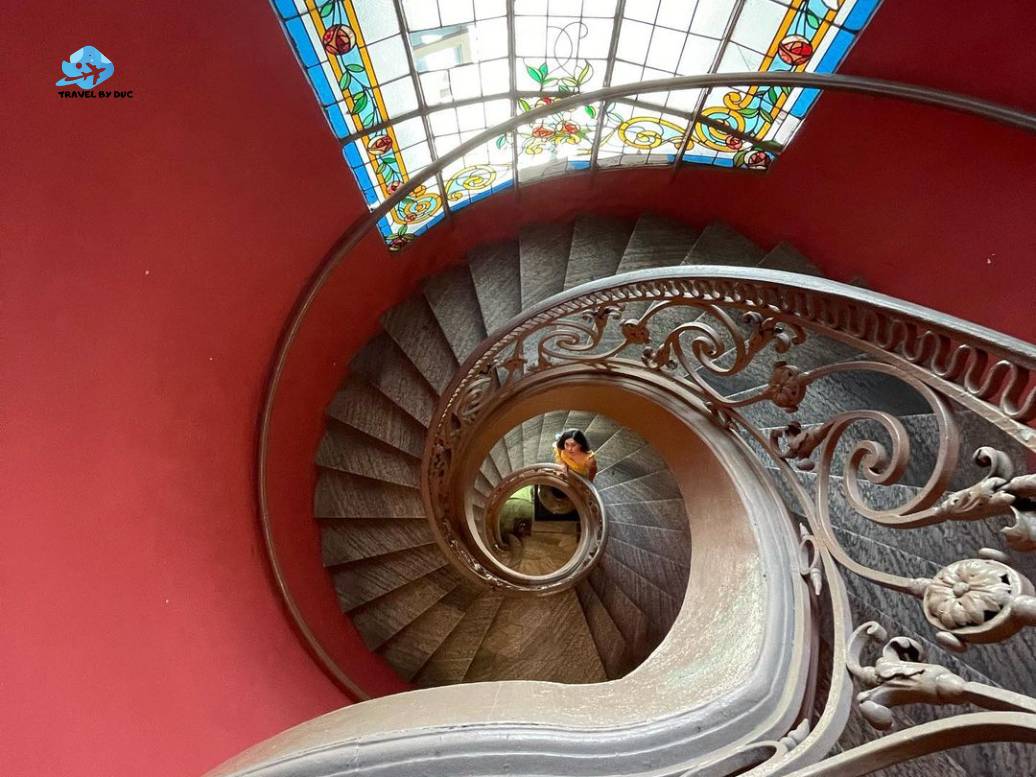
European and Vietnamese influences in the architecture
What makes the architecture especially memorable to me is the way European and Asian influences appear together. The overall structure reflects European architectural ideas associated with the colonial period, while decorative features such as roof elements, ceramic details, and ornamental patterns show influences from Vietnamese and wider Asian traditions. This combination reflects the cultural complexity of old Saigon. The building was created during a period when different architectural traditions were interacting with one another, and the result was something that does not fit neatly into a single style. As I walked through the museum of fine art Ho Chi Minh, I found myself thinking about how appropriate the architecture was for an art museum. The building itself feels like part of the city’s cultural collection. Even if you are not particularly interested in art, spending some time appreciating its architecture can make your visit feel much more complete.
Read more:
How to find cheap clothes Ho Chi Minh without sacrificing quality
What cheap clothes Ho Chi Minh are worth buying for travelers