Before visiting the palace, I expected the experience to focus mostly on architecture and famous historical events. But once I entered the independence palace exhibition, I realized that many of the most interesting details were much quieter and easier to overlook. Instead of dramatic displays, the exhibition slowly revealed layers of history through preserved rooms, communication equipment, photographs, maps, and everyday objects connected to an important period of Vietnam’s past.
What made the independence palace exhibition memorable for me was the feeling that history remained present inside the building rather than simply being explained through signs or timelines. Walking through the halls felt less like moving through a traditional museum and more like stepping into spaces that had been left almost untouched by time. Some rooms still carried a formal atmosphere, while others especially the underground bunker areas felt tense, practical, and unexpectedly personal.
As I explored further, I noticed how the independence palace exhibition encouraged visitors to observe details carefully instead of rushing from one highlight to another. Small objects, preserved furniture, old communication devices, and wartime maps all helped create a deeper understanding of how the palace once functioned during moments of political uncertainty and conflict.
Another thing I appreciated about the independence palace exhibition was the contrast between the peaceful atmosphere of the building today and the historical tension connected to many of the rooms. The elegant reception halls upstairs created one emotional feeling, while the underground operational areas revealed another side of the palace entirely. That contrast made the experience feel much more immersive and emotionally layered than I originally expected.
For travelers visiting Ho Chi Minh City, the independence palace exhibition becomes far more meaningful when explored slowly. Instead of only taking photographs or focusing on famous historical moments, paying attention to smaller details inside the rooms helps reveal how architecture, politics, and everyday life once intersected within the palace itself.
Understanding how the independence palace exhibition quietly preserves the atmosphere of another period in Vietnam’s history
Before entering the palace, I imagined the independence palace exhibition would feel similar to a traditional museum with displays, information panels, and historical photographs placed behind glass. But once I started walking through the rooms, the experience felt much more immersive and emotional than I expected. Instead of simply showing history, the exhibition allowed the atmosphere of the building itself to tell the story gradually.
What stayed with me most was the feeling that many spaces inside the independence palace exhibition had been carefully preserved rather than recreated. The rooms did not feel artificial or heavily redesigned for tourists. Because of that, moving through the palace felt closer to stepping into another period of Vietnam’s history than visiting a modern exhibition space.
The quietness inside the building also changed the experience completely. Walking slowly through long corridors, reception halls, and preserved offices created a reflective atmosphere that encouraged observation instead of rushing from one display to another.
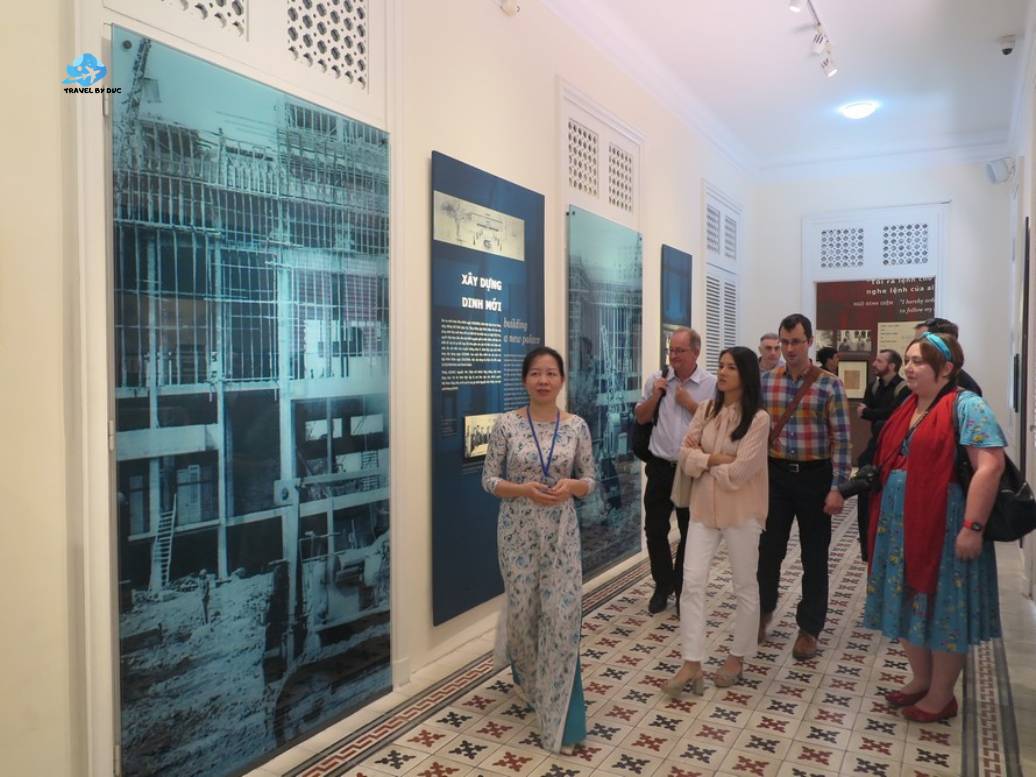
How preserved rooms reflect another period of Vietnam’s history
As I explored deeper into the independence palace exhibition, I began noticing how much history remained visible through the preserved rooms themselves. Large meeting halls, private offices, communication rooms, and formal reception areas still carried traces of the period when the palace functioned as an active political center.
What made the independence palace exhibition feel meaningful was not only the objects displayed inside the rooms, but the arrangement of the spaces themselves. Furniture placement, wall decorations, old telephones, maps, and working areas all revealed how political operations once functioned inside the building.
Some rooms felt formal and ceremonial, while others especially the underground areas felt practical and tense. That contrast created a more layered understanding of Vietnam’s history because the palace revealed both public political life and the hidden operational side beneath it.
Why the exhibition feels more personal than expected
One thing I did not expect about the independence palace exhibition was how personal the experience would feel. Instead of presenting history in a distant or dramatic way, the exhibition allowed smaller details to create emotional impact quietly over time.
As I walked through the preserved interiors, I found myself imagining the people who once worked, waited, and made important decisions inside these spaces. The stillness of the rooms made the experience feel surprisingly human rather than purely historical.
I also noticed that the independence palace exhibition encourages visitors to slow down naturally. Without loud effects or overwhelming displays, attention shifts toward atmosphere, silence, and observation. That slower rhythm made the palace feel less like a tourist attraction and more like a place where history continues to exist within the architecture itself.
For travelers visiting Ho Chi Minh City, I think the independence palace exhibition becomes most memorable when approached patiently. The deeper meaning of the experience often appears through smaller details, quiet spaces, and the emotional contrast between the peaceful environment today and the historical events once connected to these rooms.
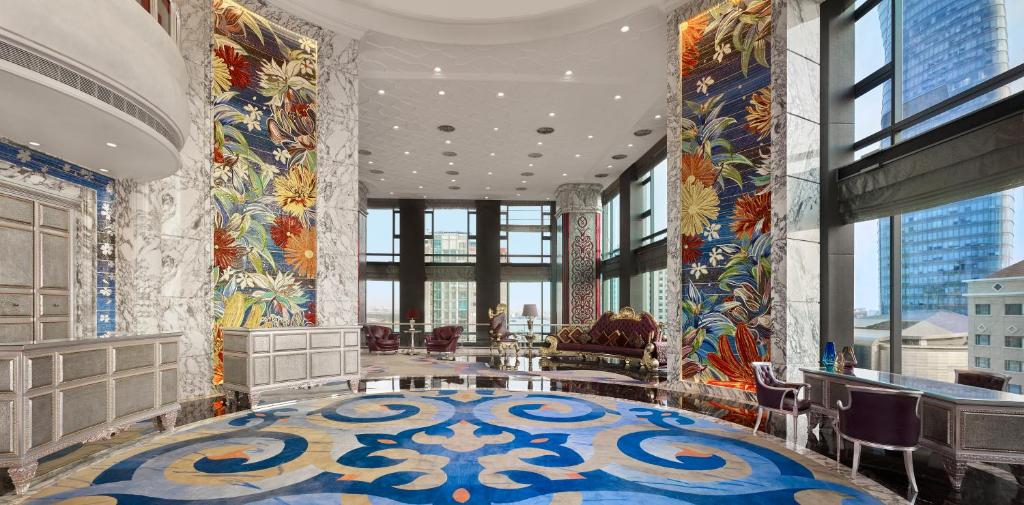
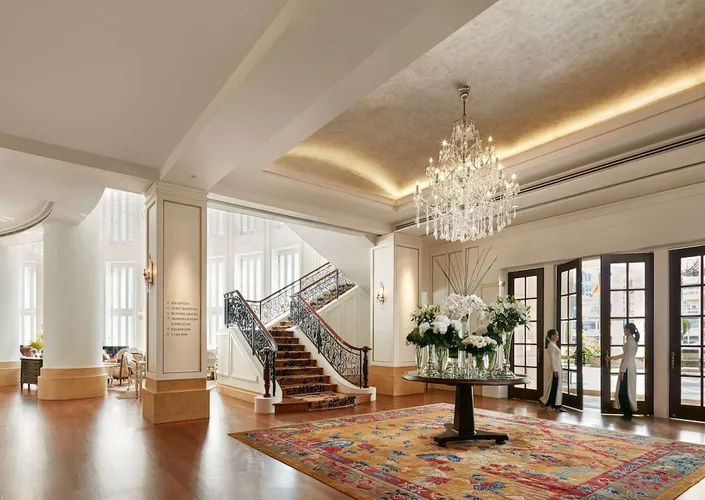
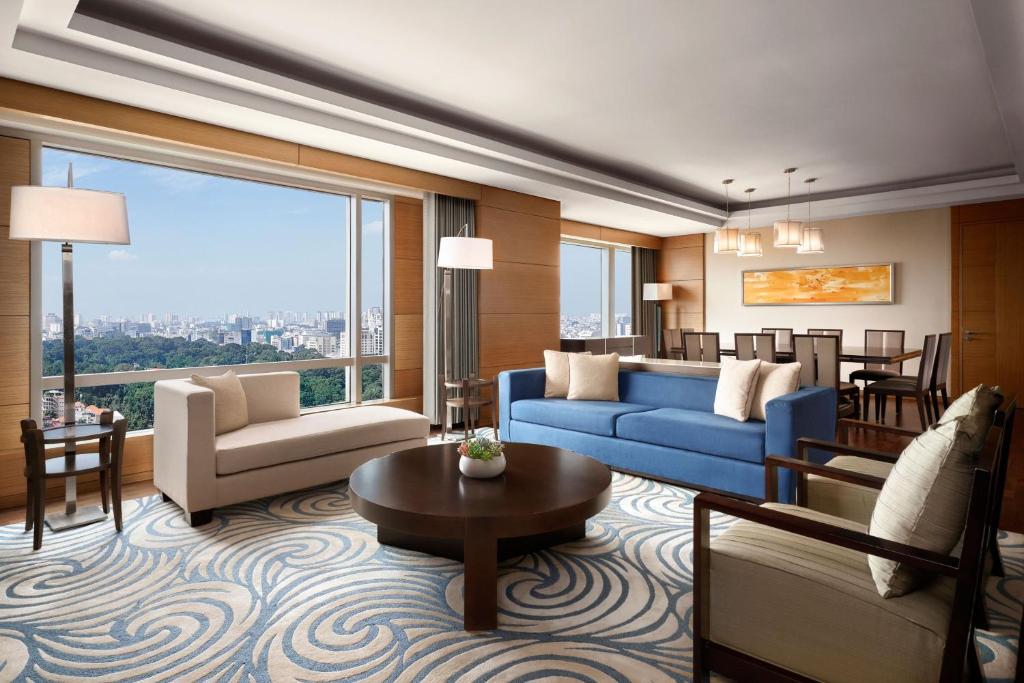
Discovering the hidden historical details inside the independence palace exhibition that many travelers quietly overlook
While walking through the palace, I realized that some of the most interesting parts of the independence palace exhibition were not the large ceremonial halls or famous historical rooms. Instead, the details that stayed with me most were often the smaller objects and preserved spaces that many visitors passed by quickly without noticing. For travelers searching for meaningful things to do in HCM city, this quieter and more reflective side of the palace offers a very different experience from the usual busy tourist attractions.
At first, I moved through the exhibition the same way many travelers probably do focusing on major rooms, taking photographs, and observing the overall architecture. But once I slowed down, the independence palace exhibition began to reveal a much deeper atmosphere through maps, communication equipment, furniture arrangements, and traces of everyday activity connected to another period of Vietnam’s history. Among the many historical things to do in HCM city, this experience felt surprisingly personal because the building itself still carried traces of the past in such a natural way.
What made the experience memorable was how naturally these details blended into the building itself. Nothing felt overly staged or dramatically presented. Because of that, discovering these quieter historical elements felt more personal and authentic during my visit. I realized that some of the most rewarding things to do in HCM city are not always the loudest or most crowded experiences, but the places that slowly reveal their stories through atmosphere, silence, and careful observation.
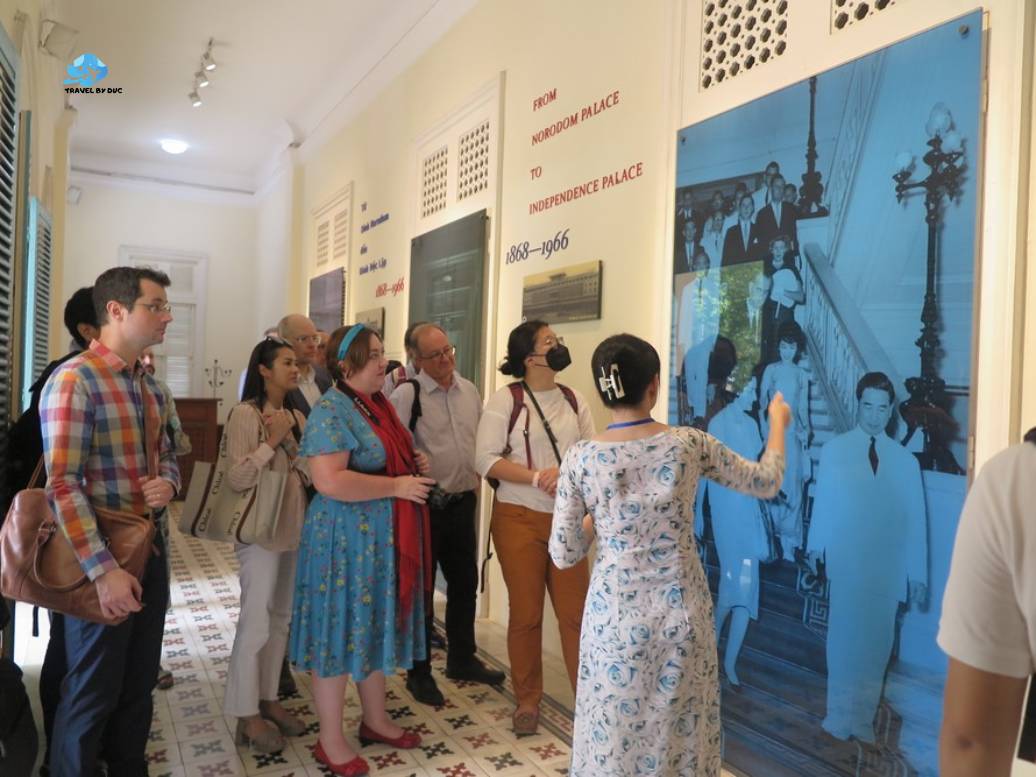
Old photographs maps and communication equipment
One of the most fascinating parts of the independence palace exhibition was seeing the preserved photographs, military maps, and communication equipment still arranged inside the rooms. At first glance, some of these objects seemed simple or even easy to overlook. But the longer I spent observing them, the more they helped me imagine how the palace once functioned during politically tense periods.
The old telephones, radio systems, and operational maps inside the underground areas gave the independence palace exhibition a very different emotional atmosphere compared to the elegant reception halls upstairs. These spaces felt practical, urgent, and deeply connected to wartime decision making rather than public ceremony.
What I appreciated most was how the exhibition allowed these historical objects to remain part of the environment instead of separating them into isolated museum displays. That approach made the palace feel more alive historically, as though the rooms still carried traces of the conversations and decisions that once happened there.
Furniture interior layouts and preserved historical objects
Another detail that surprised me inside the independence palace exhibition was how much the furniture and interior layouts contributed to the storytelling of the building. Large wooden desks, arranged seating areas, preserved meeting rooms, and carefully designed interiors all reflected the political and social atmosphere of the time.
Some spaces felt formal and diplomatic, while others felt unexpectedly simple and functional. I noticed that the independence palace exhibition communicates history quietly through the arrangement of space rather than relying only on written explanations. Even the positioning of chairs, tables, and decorative objects seemed to reveal something about hierarchy, ceremony, and the daily rhythm of the palace during its active years.
Walking through these preserved interiors slowly made the experience feel far more immersive than I expected. Instead of viewing history from a distance, I felt as though I was temporarily stepping into a world that had remained suspended between past and present.
For travelers visiting Ho Chi Minh City, I think the independence palace exhibition becomes most rewarding when explored patiently. The hidden details often reveal themselves gradually through silence, observation, and the feeling of moving carefully through spaces that still carry the atmosphere of another historical era.
Exploring the underground bunker spaces inside the independence palace exhibition that reveal a completely different side of the building
While the upper floors of the palace felt elegant, spacious, and filled with natural light, the atmosphere changed immediately once I entered the underground sections of the independence palace exhibition. Walking down into the bunker areas felt like crossing into another hidden layer of history that many visitors do not fully expect at first.
What surprised me most was how dramatic the emotional contrast became underground. The calm reception halls and carefully designed meeting rooms upstairs suddenly disappeared, replaced by narrow corridors, reinforced walls, operational rooms, and quieter spaces that carried a much heavier atmosphere. Exploring this part of the independence palace exhibition made the history feel far more real and immediate than I had imagined before arriving.
The deeper I moved into the bunker, the more I realized that these underground areas were not simply preserved rooms for display. They once functioned as active wartime spaces connected to communication, decision making, and emergency operations during uncertain historical periods in Vietnam.
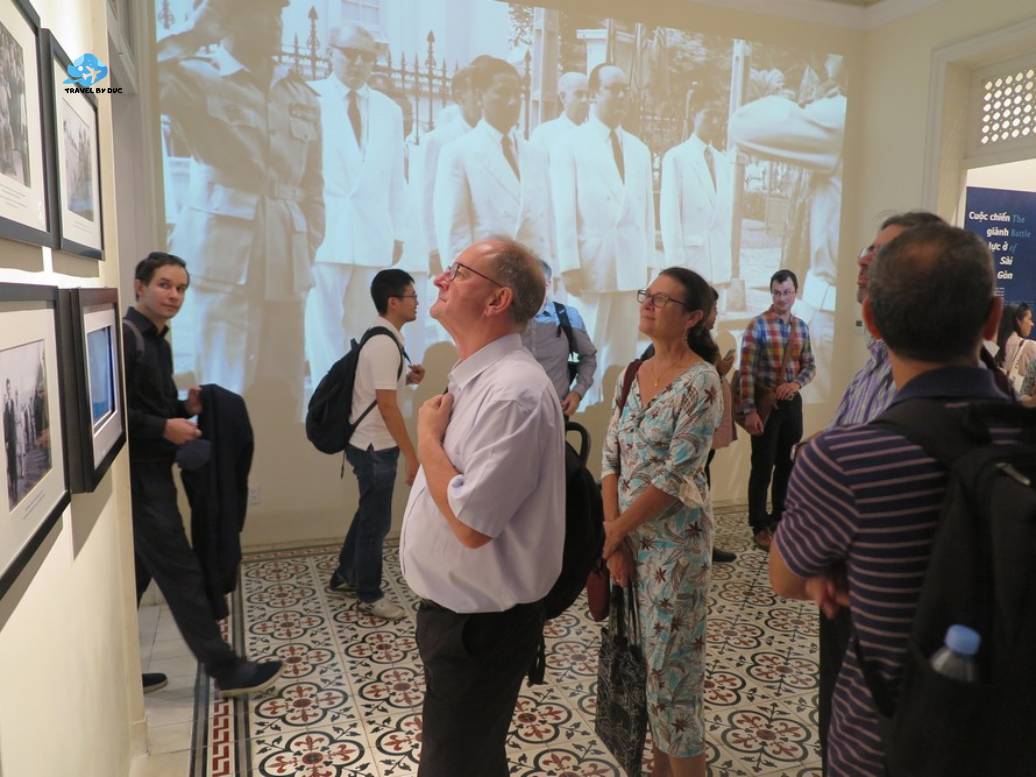
Wartime communication rooms and operational spaces
One of the most fascinating parts of the independence palace exhibition was seeing the wartime communication rooms still preserved underground. Old telephones, radio systems, military maps, and operational equipment remained arranged throughout the bunker almost as though the spaces had been left untouched for decades.
Unlike the ceremonial rooms upstairs, these operational spaces felt intensely practical. The atmosphere inside the independence palace exhibition underground areas was quieter and more focused, with every room appearing designed for efficiency rather than appearance.
As I slowly walked through the bunker corridors, I found myself imagining the tension that once existed inside these rooms. The preserved communication equipment made the historical events connected to the palace feel much more human and immediate. Instead of reading history through displays alone, the environment itself created the emotional impact naturally.
How the underground areas change the emotional atmosphere
What affected me most about the underground section of the independence palace exhibition was how completely it changed the emotional tone of the visit. Upstairs, the palace often felt calm, balanced, and architecturally elegant. Underground, everything became quieter, heavier, and more intense.
The low ceilings, enclosed hallways, and limited natural light created a sense of isolation that contrasted sharply with the openness of the upper floors. This difference made me understand the palace in a much deeper way. The independence palace exhibition was no longer simply about architecture or historical symbolism it also revealed the hidden operational reality beneath the political image presented above ground.
I noticed that many visitors moved through these areas more slowly and spoke more quietly. The bunker naturally encouraged reflection without needing dramatic explanations or visual effects. For me, this became one of the most memorable parts of the entire palace because it transformed the experience from ordinary sightseeing into something much more emotional and immersive.
For travelers visiting Ho Chi Minh City, I think the underground sections of the independence palace exhibition are essential to understanding the building fully. They reveal not only the visible historical narrative presented upstairs, but also the hidden spaces where fear, strategy, communication, and uncertainty once shaped daily life beneath the surface of the palace.
Read more:
What travelers should notice when exploring independence palace architecture
The best time to visit based on independence palace opening hours
Conclusion
Looking back, what made the independence palace exhibition so memorable was not only the history itself, but the way the palace allowed that history to be experienced through atmosphere, preserved spaces, and small hidden details. Before visiting, I expected a traditional historical attraction filled mainly with displays and information panels. Instead, I found an environment where the building itself quietly carried the weight of another period in Vietnam’s past.
As I moved through the elegant reception halls, preserved offices, communication rooms, and underground bunker areas, the independence palace exhibition gradually revealed different emotional layers. Some spaces felt calm and ceremonial, while others especially underground carried a much heavier and more tense atmosphere. That contrast made the experience feel far more immersive than I originally expected.
What stayed with me most was how naturally the exhibition encouraged slower observation. The preserved furniture, wartime equipment, maps, and operational rooms did not rely on dramatic presentation to create impact. Instead, the emotional connection appeared gradually through silence, architecture, and the feeling of standing inside spaces where important historical moments once unfolded.
For travelers visiting Ho Chi Minh City, I think the independence palace exhibition becomes most meaningful when explored patiently rather than quickly. The palace is not simply a place to photograph or check off a travel list. It is a space where architecture, politics, memory, and atmosphere remain deeply connected even decades later.
In the end, the independence palace exhibition left me with the feeling that history is often understood best not through large dramatic moments alone, but through the quieter details preserved inside rooms, corridors, and hidden spaces that continue to hold the atmosphere of the past long after history itself has moved forward.
Duc I'm a traveler who was born and raised right here in Vietnam. For decades, I’ve been exploring, and for me, traveling is much more than seeing sights. Today, through my blog, Travel by Duc, my mission is simple: to be a genuine resource to help you travel smarter, explore the world with confidence, and find a deeper sense of connection wherever you go. The world is waiting, and I look forward to exploring it together!